Can I Give My Dog Pepto-Bismol?
Pepto-Bismol is not clearly toxic to dogs, but it is not a safe go-to home remedy either. It contains bismuth subsalicylate, which breaks down into salicylate - the aspirin family - and can cause stomach bleeding, and its bismuth also turns stools black, hiding that bleeding. Only give it if your vet has told you to, at the dose they specify, and never to dogs on NSAIDs, dogs with bleeding disorders, or pregnant or nursing dogs. Always call your vet before giving it.
You can in some cases, but you shouldn’t reach for it on your own. Pepto-Bismol should only be given to a dog on the advice of your vet. It isn’t automatically toxic, but it carries real risks that make it a poor choice as a DIY remedy for an upset stomach.
Why vets are cautious about it
Pepto-Bismol’s active ingredient is bismuth subsalicylate. Inside the body it splits into two parts, and both cause concern:
- Salicylate - this is in the same family as aspirin. In excess it can irritate and even cause bleeding in the stomach and intestines, and can affect the kidneys, liver and blood clotting.
- Bismuth - this commonly turns the stool black. That’s harmless in itself, but black stool is also a warning sign of digestive bleeding - so it can mask a serious problem and make it hard for you or your vet to spot.
Dogs that should never have Pepto-Bismol
Do not give it at all to a dog that:
- Is already taking an NSAID (such as a vet-prescribed anti-inflammatory) or steroids
- Has a bleeding disorder
- Is pregnant or nursing
- Has kidney disease or a known sensitivity to aspirin
Cats should never be given it at all - they are extremely sensitive to salicylates.
What about the dose?
Some vets do use it briefly, and general guidance is around 1 teaspoon per 10 lb of body weight, for no more than one or two doses. But the right amount and whether it’s appropriate at all depends on your dog’s size, health and what’s causing the symptoms - which is exactly why this is a phone-call-to-the-vet decision, not a guess. Giving too much can lead to dehydration and damage to the liver and kidneys.
Safer first steps for an upset stomach
For mild, short-lived stomach upset in an otherwise healthy adult dog, vets often suggest simpler measures first:
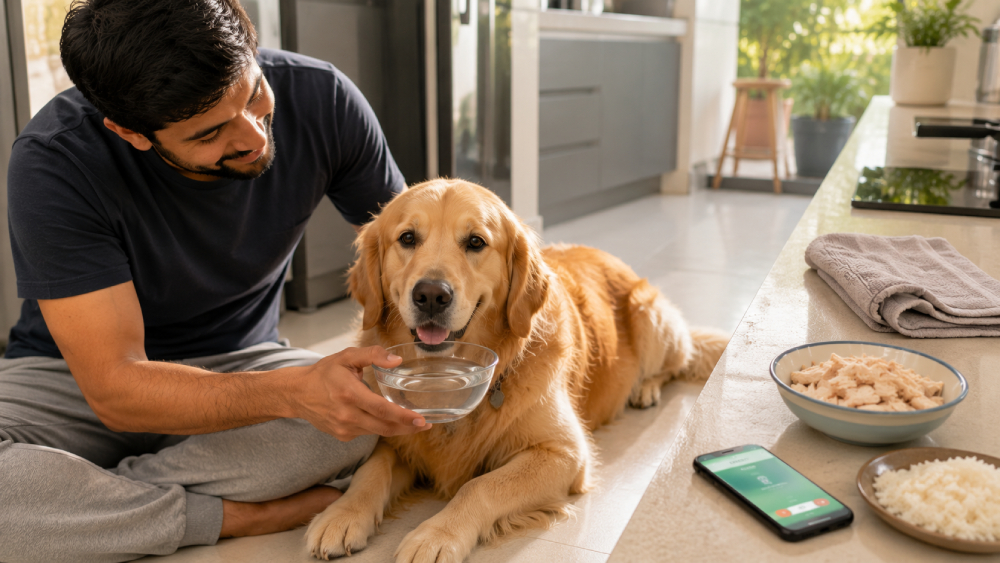
- A brief rest from food (only if advised for your dog), then a bland diet of plain boiled chicken and white rice
- Small, frequent sips of water to prevent dehydration
- Plain canned pumpkin for a little fibre
- A dog-specific probiotic
See our guide on recognising when a dog is unwell and our related answers on digestive upsets. Call your vet if there is blood in the vomit or stool, black tarry stool, repeated vomiting, weakness, or symptoms lasting more than a day or two.
References
- Is Pepto-Bismol Safe For Dogs? - American Kennel Club
- Can You Give a Dog Pepto-Bismol? - PetMD
- Bismuth Compounds - VCA Animal Hospitals
This article is general information, not veterinary advice. Always speak to your vet before giving any human medication to your dog.