Homemade Dog Biscuits and Training Treats Recipes
Make small, crunchy training treats and larger dog biscuits at home. Low calorie, easy to break apart, and perfect for rewarding good behavior during training sessions.
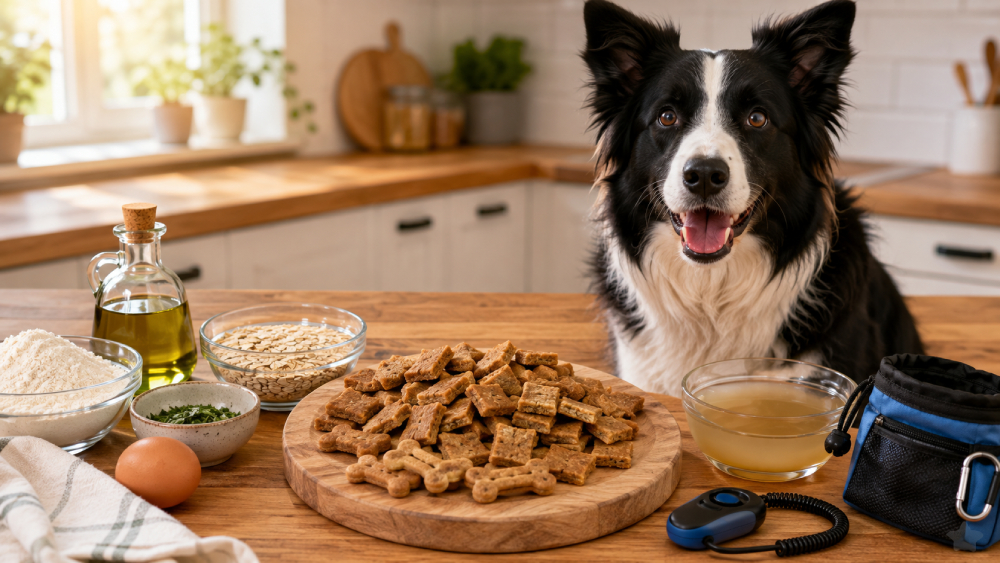
Ingredients
- 1 cup whole wheat flour
- 1/2 cup oat flour
- 1/3 cup low-sodium chicken broth
- 1 egg
- 1 tablespoon dried parsley flakes
- 1 tablespoon olive oil
Instructions
- Preheat oven to 350°F (175°C). Line a baking sheet with parchment paper.
- In a bowl, whisk together the whole wheat flour, oat flour, and dried parsley.
- In a separate bowl, beat the egg and mix with the chicken broth and olive oil.
- Pour the wet ingredients into the dry ingredients and stir until a smooth dough forms. Add a tablespoon of water if the dough is too crumbly.
- Roll the dough out on a floured surface to about 1/4 inch thickness.
- For training treats, cut into very small pieces about 1/2 inch square. For regular biscuits, cut into larger bone or round shapes.
- Place on the baking sheet and bake for 20 to 25 minutes until golden and crisp.
- Turn off the oven and leave the treats inside with the door cracked for 30 minutes to dry out completely. This makes them extra crunchy.
Nutrition Information
- Calories: 15 per training treat
- Protein: 0.5g
- Fat: 0.5g
- Carbohydrates: 2g
- Fiber: 0.3g
- Sodium: 5mg
Tips & Notes
Here are some important tips to help you get the best results from this recipe:
- Training treats should be very small — about the size of a pea for small dogs and a blueberry for larger dogs. Small treats let you reward frequently without overfeeding.
- Dried parsley freshens breath naturally and adds a green color dogs do not mind. You can also use dried mint.
- For softer treats that are easier to chew for puppies or senior dogs, reduce baking time by 5 minutes.
- Store in an airtight container at room temperature for up to 3 weeks. The low moisture content gives these a long shelf life.
Frequently Asked Questions
What are the best treats for dog training?
The best training treats are small, low-calorie, quick to eat, and highly motivating. They should be about the size of a pea so your dog can eat them instantly without stopping to chew. Soft treats work better for most training situations because dogs can eat them faster. Reserve higher-value treats like small pieces of cooked chicken or cheese for more difficult commands and use everyday biscuits for routine rewards.
How many training treats can I give my dog per day?
During active training sessions, you may give dozens of tiny treats in a single session, which is fine as long as each treat is very small and low in calories. The total treat intake should stay below 10 percent of your dog's daily calories. If you have an intensive training day, reduce the next meal portion slightly to compensate. These homemade treats at 15 calories each allow for many rewards per session.
Can I use all-purpose flour in dog treats?
Yes, all-purpose flour is safe for dogs and can be used in treat recipes. However, whole wheat flour and oat flour provide more nutritional value including fiber, vitamins, and minerals. Oat flour is the gentlest option for dogs with sensitive stomachs. If your dog has a grain allergy, use coconut flour or chickpea flour instead. Avoid self-rising flour which contains added salt and leavening agents.
What makes dog treats crunchy?
Crunchiness in dog treats comes from low moisture content. To achieve maximum crunch, roll the dough thin, bake until golden, then leave the treats in the turned-off oven for an additional 15 to 30 minutes to dry out. Using less liquid in the recipe and more flour also helps. Crunchy treats have a longer shelf life than soft ones because moisture promotes mold growth.