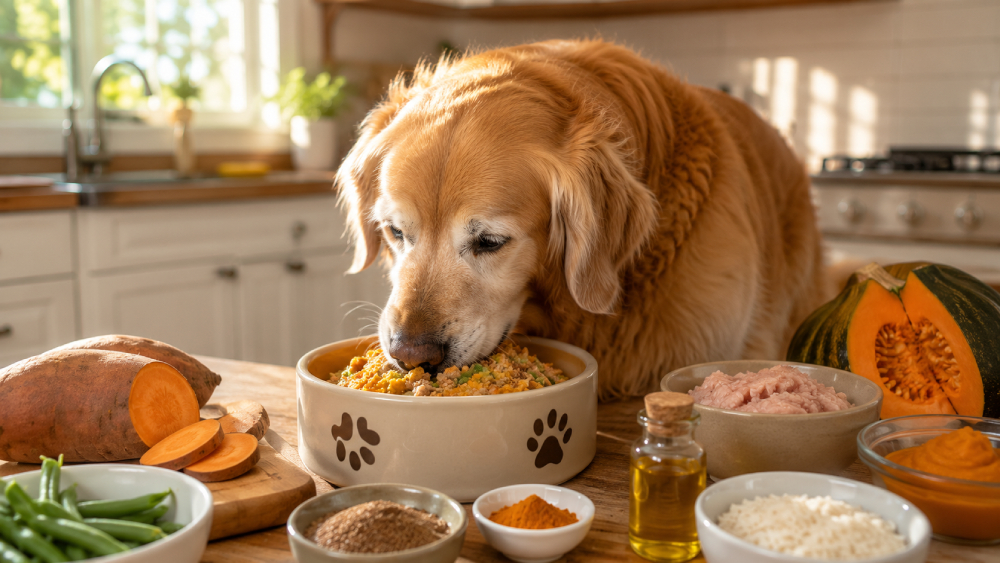
Vet-Approved Homemade Dog Food for Skin Allergies
A limited-ingredient, hypoallergenic homemade dog food recipe for dogs with skin allergies. Uses novel proteins and anti-inflammatory ingredients to soothe itchy skin.

Ingredients
- 1 lb wild-caught salmon fillet (or canned salmon)
- 1.5 cups white rice
- 1 cup diced sweet potato
- 1/2 cup chopped zucchini
- 1 tablespoon coconut oil
- 1 tablespoon fish oil (for omega-3s)
- 1/4 teaspoon turmeric
Instructions
- Cook the white rice according to package directions. White rice is easier to digest than brown rice for dogs with allergies.
- Peel and dice the sweet potato into small cubes. Boil or steam for 12 minutes until very soft.
- If using fresh salmon, bake at 400°F for 12 to 15 minutes until it flakes easily. Remove all skin and bones. If using canned salmon, drain and check for bones.
- Dice the zucchini and steam for 5 to 6 minutes until tender.
- Flake the cooked salmon into small pieces in a large bowl.
- Add the rice, sweet potato, and zucchini to the salmon. Mix gently.
- Drizzle coconut oil, fish oil, and turmeric over the mixture. Stir to distribute evenly.
- Cool completely before serving. Store in the refrigerator for up to 4 days or freeze portions.
Nutrition Information
- Calories: 190 per cup
- Protein: 20g
- Fat: 7g
- Carbohydrates: 14g
- Fiber: 1.5g
- Omega-3: 1.2g
Tips & Notes
Here are some important tips to help you get the best results from this recipe:
- Salmon is an excellent novel protein for dogs with chicken or beef allergies. It is also rich in omega-3 fatty acids that reduce skin inflammation.
- An elimination diet identifies allergens by feeding a single protein and single carb for 8 to 12 weeks, then reintroducing foods one at a time.
- Coconut oil applied topically can soothe dry, itchy skin. Use it both in food and as a coat conditioner.
- Common food allergens in dogs include chicken, beef, dairy, wheat, soy, and eggs. If your dog reacts to this recipe, consult your vet about other novel proteins like venison or duck.
Frequently Asked Questions
What is the best homemade diet for dogs with skin allergies?
The best approach is a limited-ingredient diet using a novel protein your dog has never eaten (such as salmon, venison, duck, or rabbit) and a single easily digestible carbohydrate like sweet potato or white rice. Avoid common allergens including chicken, beef, dairy, wheat, corn, and soy. Add omega-3 fatty acids from fish oil to reduce skin inflammation. Work with your vet to identify specific triggers through an elimination diet.
Can food allergies cause skin problems in dogs?
Yes, food allergies are a common cause of skin problems in dogs. Symptoms include chronic itching, hot spots, ear infections, paw licking, face rubbing, hair loss, and red or inflamed skin. Unlike environmental allergies which are often seasonal, food allergy symptoms persist year-round. Food allergies develop over time with repeated exposure, so even foods your dog has eaten for years can eventually trigger a reaction.
How long does it take for a hypoallergenic diet to help a dog?
Most dogs begin showing improvement in skin symptoms within 4 to 6 weeks on a strict hypoallergenic or elimination diet. However, a full trial should last 8 to 12 weeks before concluding whether the diet is effective. During this period, the dog must eat only the prescribed diet with absolutely no treats, table scraps, or other foods that could contain allergens and confound the results.
Are grain-free diets better for dogs with allergies?
Not necessarily. True grain allergies in dogs are uncommon. Most food allergies in dogs are triggered by proteins like chicken, beef, or dairy rather than grains. A grain-free diet may help if your dog specifically reacts to wheat or corn, but eliminating the offending protein source is usually more effective. Additionally, some grain-free diets have been linked to potential heart issues. Work with your vet to identify the actual allergen.