How Often Should I Feed My Dog?
Most adult dogs do best on two meals a day, about 8 to 12 hours apart. Puppies need to eat more often - usually 3 to 4 meals a day when young, dropping to twice daily by around 6 months. Some adult dogs manage fine on one meal a day, while dogs with certain health conditions need smaller, more frequent meals. Always split the recommended daily amount across those meals rather than adding extra.
For most adult dogs, twice a day is the sweet spot - but the right frequency really depends on your dog’s age, size and health. Whatever the number of meals, the golden rule is to divide the recommended daily amount across them, not feed a full portion each time.
Adult dogs (over 1 year)
Vets typically recommend feeding an adult dog twice a day - morning and evening, roughly 8–12 hours apart. This keeps energy steady and helps prevent the empty-stomach nausea some dogs get.
Exceptions:
- Once a day can suit some healthy, less food-motivated adult dogs - ask your vet if it’s right for yours.
- More frequent, smaller meals are better for dogs prone to acid reflux or with certain medical conditions, and for very small breeds that can drop their blood sugar.
Puppies (need to eat more often)
| Age | Meals per day |
|---|---|
| 6–12 weeks | 4 meals |
| 3–6 months | 3 meals |
| 6–12 months | 2 meals |
Puppies grow fast and have small stomachs, so they need food spread through the day. Toy and small breeds in particular may need frequent small meals early on to keep their blood sugar stable. Most dogs move to a twice-daily adult routine by around their first birthday (later for giant breeds).
How much, not just how often
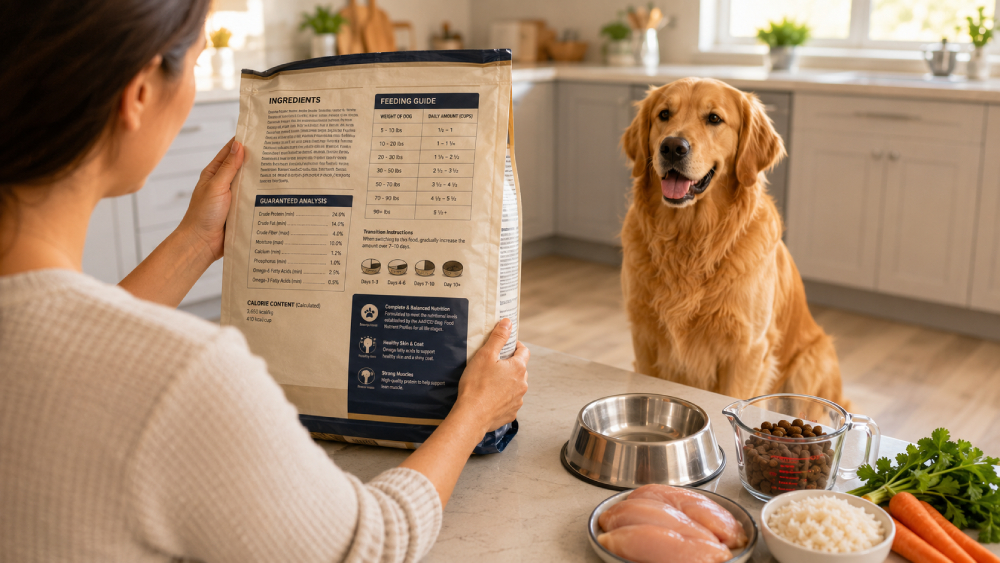
Frequency is only half the picture - portion size matters more for weight. Use the feeding guide on your dog food as a starting point (based on weight), then adjust with your vet to keep your dog at a healthy body condition. Remember that treats should stay under 10% of daily calories, and count them toward the total.
Tips for a healthy feeding routine
- Keep meals at consistent times - dogs thrive on routine, and it helps with toilet training.
- Measure the food rather than eyeballing it.
- Always provide fresh water.
- Avoid heavy exercise right after a big meal, especially in large, deep-chested breeds, to reduce bloat risk.
When in doubt, your vet can set an exact schedule and portion for your dog’s age, size, breed and health.
References
- Feeding Times and Frequency for Your Dog - VCA Animal Hospitals
- How Many Times a Day Should a Dog Eat? - American Kennel Club
- How Much & How Often to Feed Your Dog - Hill’s Pet
This article is general information, not veterinary advice. Ask your vet for a feeding plan tailored to your dog.