How to Get Rid of Ticks on Dogs Naturally: Home Remedies That Work (and Those That Don't)
Disclosure: some links below are affiliate links. If you buy through one we may earn a commission at no extra cost to you. It never changes what we recommend or how we rank it.
Search for a way to kill ticks on dogs instantly and you will find matches, nail polish, petroleum jelly and a dozen essential oils. Almost all of it is wrong, and some of it actively increases the risk of disease.
Here is what actually works, what is a waste of time, and what to do the moment you find one attached.
The uncomfortable answer to "what kills ticks instantly"
Nothing you have at home kills an attached tick instantly and safely. That is the honest position, and it matters, because the popular alternatives all share the same flaw: they irritate the tick while it is still attached.
A stressed tick regurgitates into the bite wound. Anything that suffocates, burns or poisons it slowly — heat, oils, alcohol, nail polish — increases the chance of pathogens being pushed into your dog rather than reducing it. Prompt mechanical removal is what lowers disease risk, and the speed of removal matters more than the method.
How to remove a tick properly
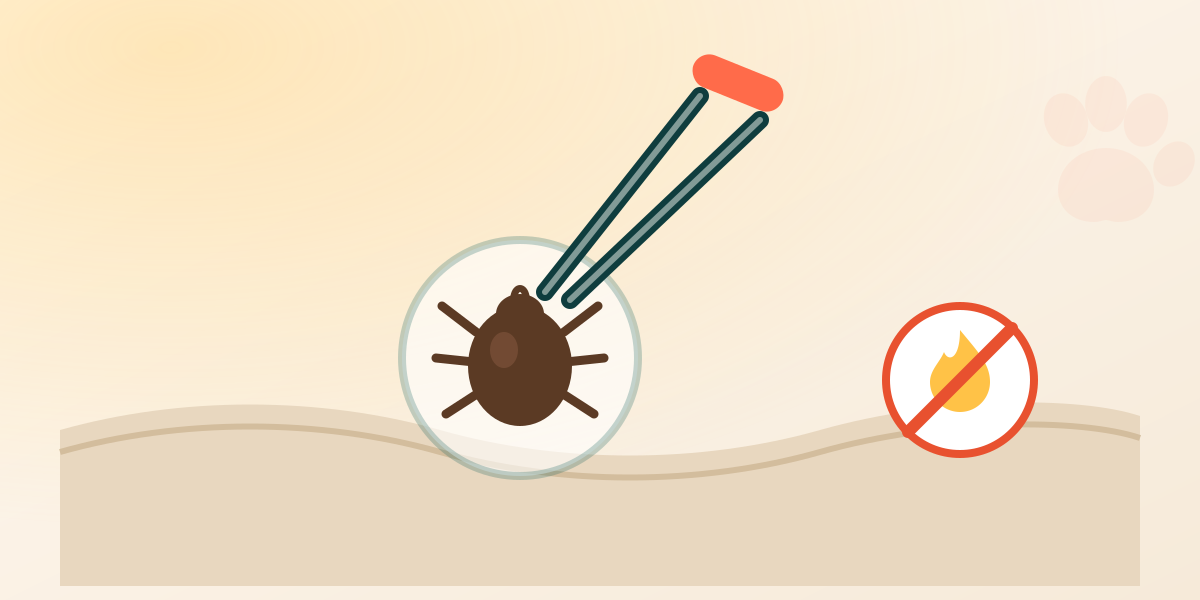
- Use fine-tipped tweezers or a tick hook. A tick hook is easier and less likely to squeeze the body. Blunt eyebrow tweezers are the wrong tool.
- Part the fur and grip as close to the skin as possible — you want the tick's mouthparts, not its body. Squeezing a full body forces contents back into the wound.
- Pull steadily upward. Slow, firm, no jerking. With a hook, slide it under and twist gently as the design intends.
- Do not twist a tick out with tweezers, and do not yank.
- Check what came out. Occasionally mouthparts stay behind. Leave them — they usually work out like a splinter. Digging around causes far more inflammation than the fragment does.
- Clean the site with mild antiseptic or soap and water, and wash your hands.
- Dispose of it safely — in alcohol in a sealed container, or taped and binned. Never crush it between your fingers; several tick-borne diseases affect people too.
- Note the date and where on the body it was.
What never to do
- A lit match or anything hot. Burns your dog, and makes the tick regurgitate.
- Petroleum jelly, nail polish or oil to "suffocate" it. Ticks breathe extremely slowly. It takes hours, during which the tick is stressed and still attached.
- Alcohol, dish soap or vinegar poured on to make it back out. It does not reliably work and it agitates the tick.
- Twisting with fingers, or crushing it in place.
- Waiting to see if it drops off. Time attached is the single biggest factor in transmission risk.
Natural remedies: what the evidence supports
Essential oils
Widely recommended online, and the area where the most harm is done. Several oils are genuinely toxic to dogs — tea tree (melaleuca) and pennyroyal among them — and undiluted oils applied to skin can cause chemical burns and neurological signs. Oils that repel ticks in a laboratory dish are not the same as products that are safe on an animal at an effective concentration for a useful length of time. Do not improvise this on your dog, and keep concentrated oils away from cats entirely.
Garlic
Do not. Garlic belongs to the allium family and damages canine red blood cells, and there is no good evidence it repels ticks anyway.
Apple cider vinegar
Harmless in the sense that a dilute rinse is unlikely to hurt a healthy dog, and useless in the sense that no reliable evidence shows it repels or kills ticks. It will not protect a dog walking through long grass.
Diatomaceous earth
Sometimes suggested for the environment. Evidence for tick control is weak, it stops working when damp, and the dust is a respiratory irritant for both dogs and people. Not something to dust onto an animal.
The natural approaches that genuinely help
These are not glamorous, but they measurably reduce how many ticks reach your dog:
- Check thoroughly after every walk in tick country. Run your fingers over the whole dog, paying attention to ears and inside them, the face and muzzle, neck and collar area, armpits, groin, between toes, and under the tail. Most ticks found within a few hours have not fed properly yet.
- Groom with a fine comb after walks — it catches unattached ticks still wandering.
- Manage the yard. Ticks need humidity and shade. Mow, clear leaf litter and long grass at the edges, and keep a gravel or wood-chip border between lawn and woodland.
- Stick to path centers and avoid brushing through long grass and bracken at the peak of the season.
- Discourage deer and rodents from the garden, since they carry ticks in.
What actually prevents ticks
Veterinary preventatives are the only products with real evidence behind them for killing and repelling ticks. They come as monthly chews, spot-ons and collars, and your vet will match one to your dog's age, weight, health and local tick species.
Two safety points worth knowing:
- Permethrin-based products are for dogs only and are severely toxic to cats. If you have both, ask your vet how to use them safely, or avoid permethrin entirely.
- Never use a product intended for a different species or a much larger dog. Dosing by guesswork causes a meaningful share of preventable poisonings.
After a tick: what to watch for
A small red bump at the bite site for a few days is normal. Contact your vet if you see:
- Spreading redness, swelling, heat or discharge at the site.
- Lameness, particularly if it shifts from leg to leg, or swollen joints.
- Fever, lethargy, or a drop in appetite in the weeks after a bite.
- Pale gums, bruising, or unexplained bleeding.
- Anything that does not seem right, even weeks later — tick-borne illness is often slow to show.
Tell your vet a tick was attached and when. It changes what they look for.
The bottom line
Remove ticks promptly with the right tool, resist everything that involves heat, oil or nail polish, keep the truly toxic "natural" remedies away from your dog, and rely on a vet-recommended preventative for actual protection. Diligent checking after every walk does more good than any home remedy on the internet.
General information only, not veterinary advice. Speak to your vet about tick prevention suited to your dog and your area.