Chicken Allergy in Dogs: Signs & Symptoms
Disclosure: some links below are affiliate links. If you buy through one we may earn a commission at no extra cost to you. It never changes what we recommend or how we rank it.
Chicken is one of the most widely used proteins in commercial dog food, which makes it one of the most common triggers for food allergies. If your dog has ongoing itching, digestive issues, or recurring ear infections, a chicken allergy dog diagnosis might be the missing piece.
Signs and Symptoms
Skin Symptoms
- Persistent itching, especially around the face, ears, paws, and belly
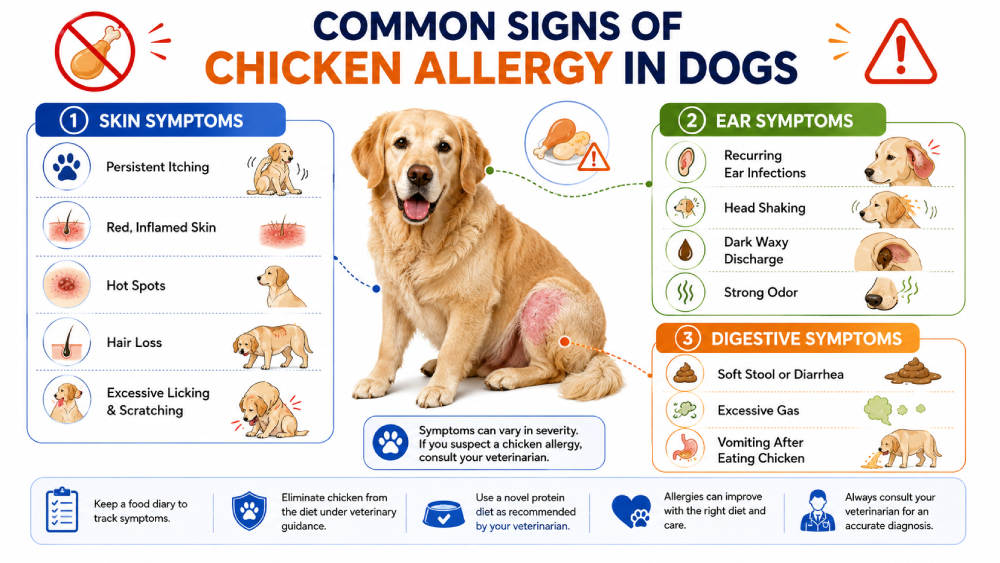
- Red, inflamed skin or hot spots
- Hair loss from excessive licking, chewing, or scratching
- Recurring skin infections or yeasty odor
Ear Symptoms
- Recurrent ear infections despite treatment
- Head shaking or scratching at the ears
- Dark, waxy discharge or strong odor
Digestive Symptoms
- Chronic or intermittent soft stool or diarrhea
- Excessive gas
- Vomiting after meals containing chicken
How Vets Diagnose a Chicken Allergy
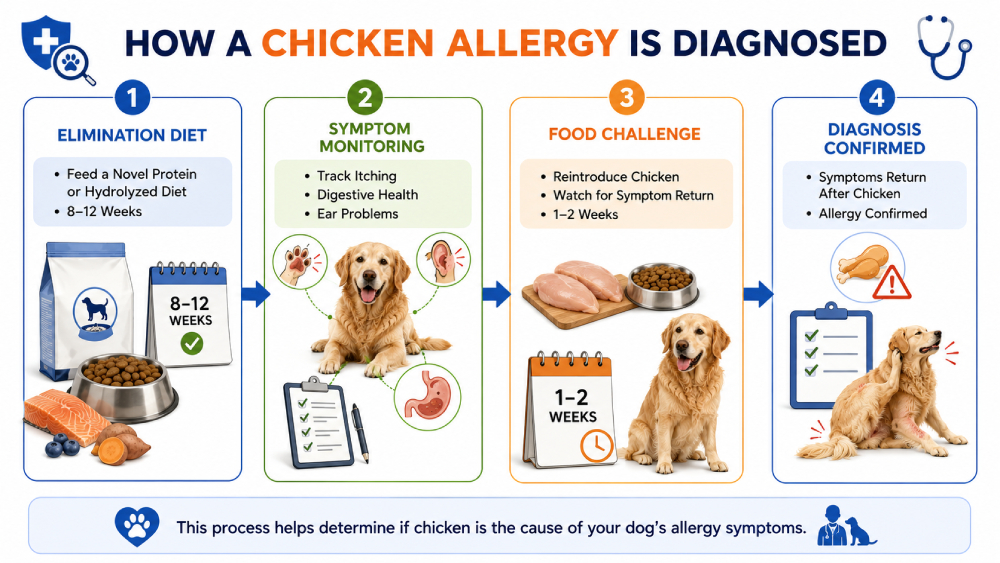
| Step | What Happens | Duration |
|---|---|---|
| 1. Elimination diet | Feed a novel protein or hydrolyzed prescription diet exclusively | 8-12 weeks |
| 2. Symptom monitoring | Track itching, digestive symptoms, and ear issues | Ongoing |
| 3. Food challenge | Reintroduce chicken to see if symptoms return | 1-2 weeks |
| 4. Confirmation | If symptoms return, allergy is confirmed | Immediate to days |
What to Feed Instead
- Choose a novel or hydrolyzed protein diet: duck, venison, rabbit
- Check every product label for hidden chicken ingredients
- Update treats, chews, and flavored medications
- Inform pet sitters and family members
Final Thoughts
A dogs and chicken allergy diagnosis can feel overwhelming, but with careful label reading and consistent management, most dogs live completely comfortable, symptom-free lives on an alternative protein.