Best Dog Supplements for Homemade Food
Disclosure: some links below are affiliate links. If you buy through one we may earn a commission at no extra cost to you. It never changes what we recommend or how we rank it.
Cooking for your dog can feel like the ultimate act of love. But well-intentioned homemade diets frequently fall short nutritionally. Understanding the best dog supplements for homemade food is essential if you are committed to home cooking long-term.
Why Homemade Dog Food Often Falls Short
The most common gaps include insufficient calcium, missing essential fatty acids, deficiencies in trace minerals like zinc and copper, and imbalanced protein in dog food relative to the dog's actual needs.
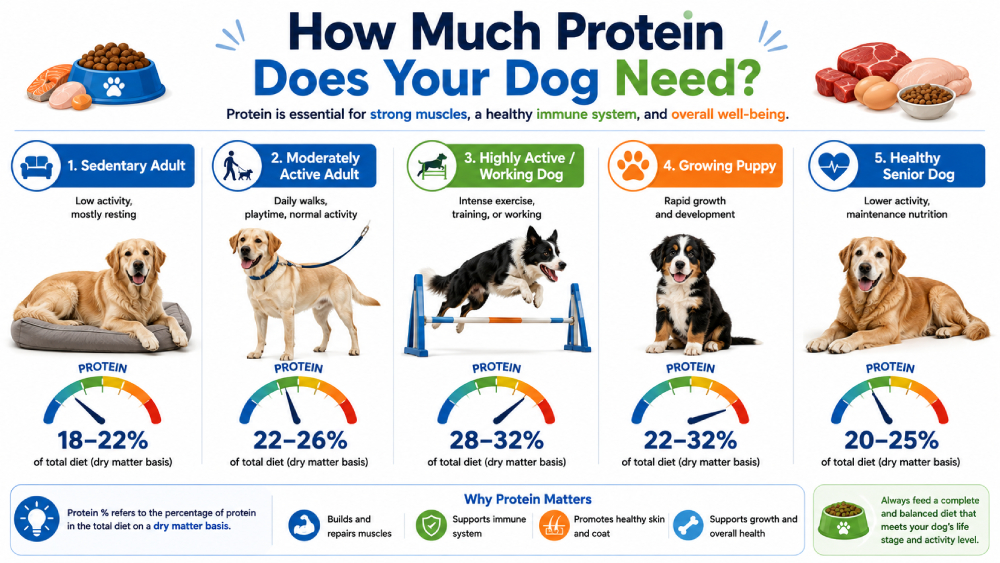
Protein Needs by Life Stage
| Life Stage | Approximate Protein Need (dry matter basis) |
|---|---|
| Puppy (growth) | 22-32% |
| Adult (maintenance) | 18-25% |
| Active/working adult | 25-30% |
| Senior | 18-25% (quality matters more) |
| Pregnant/nursing | 28-35% |
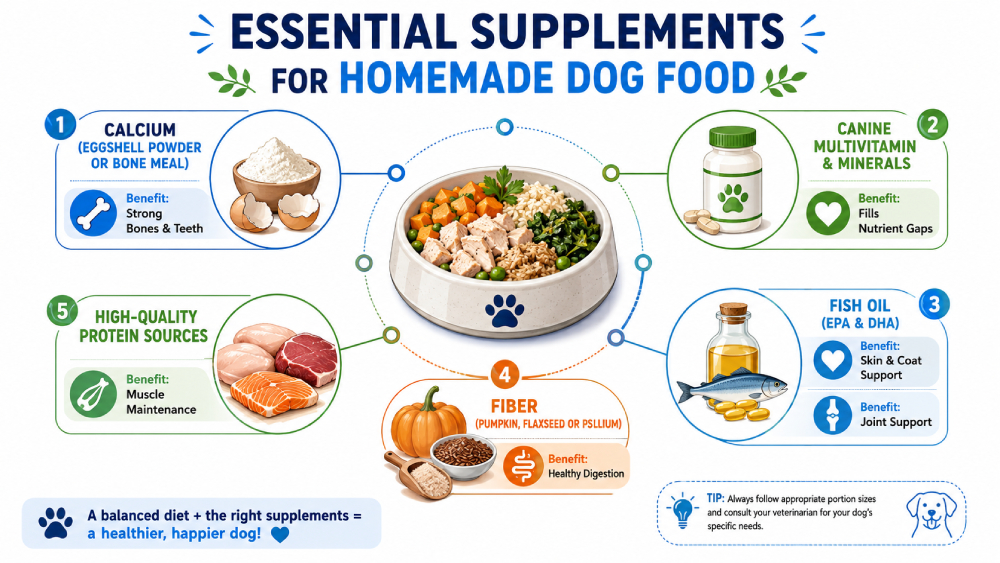
Essential Supplements
1. Calcium Source
The single most critical supplement. Meat is high in phosphorus but low in calcium. Options: ground eggshell, bone meal powder, or commercial calcium supplements.
2. Multivitamin/Mineral Supplement
Fills gaps in vitamin E, zinc, copper, manganese, and iodine.
3. Omega-3 Fatty Acids
Fish oil (EPA and DHA) supports skin, coat, joint, heart, and cognitive health.
4. Fiber Sources
Plain canned pumpkin, ground flaxseed, or psyllium husk.
Building a Balanced Meal
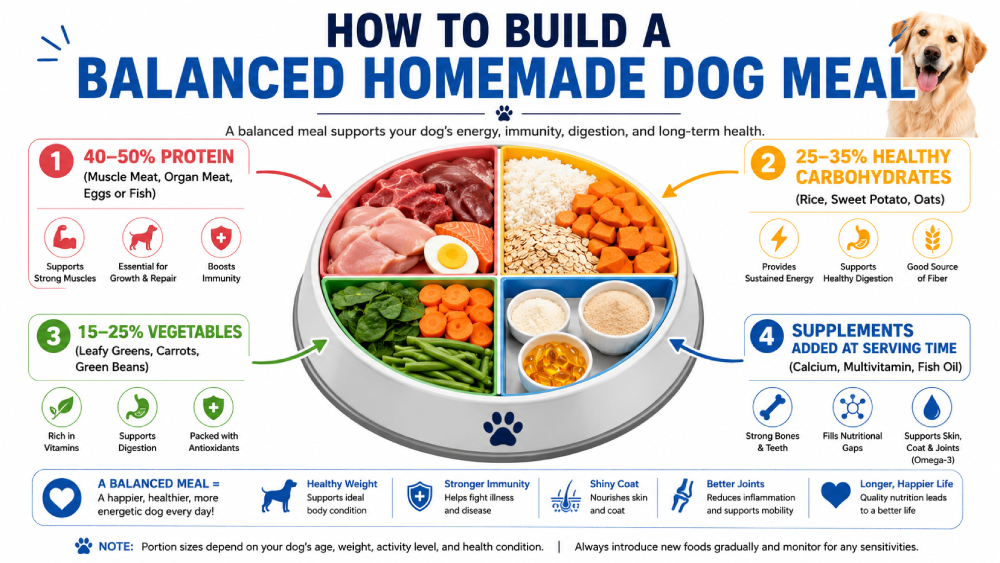
- 40-50% protein source (muscle meat + organ meat + eggs/fish)
- 25-35% carbohydrate (rice, sweet potato, oats)
- 15-25% vegetables (leafy greens, carrots, green beans)
- Calcium and multivitamin supplement per dosing instructions
- Omega-3 supplement added at serving time
Final Thoughts
Homemade dog food can be a wonderful choice, but only when it is genuinely nutritionally complete. Prioritize calcium, a quality multivitamin, omega-3s, and appropriate protein levels, ideally guided by a veterinary nutritionist.